MLB Home Run Props on Crypto Sportsbooks
 Available in US
The market every casual punter overrates
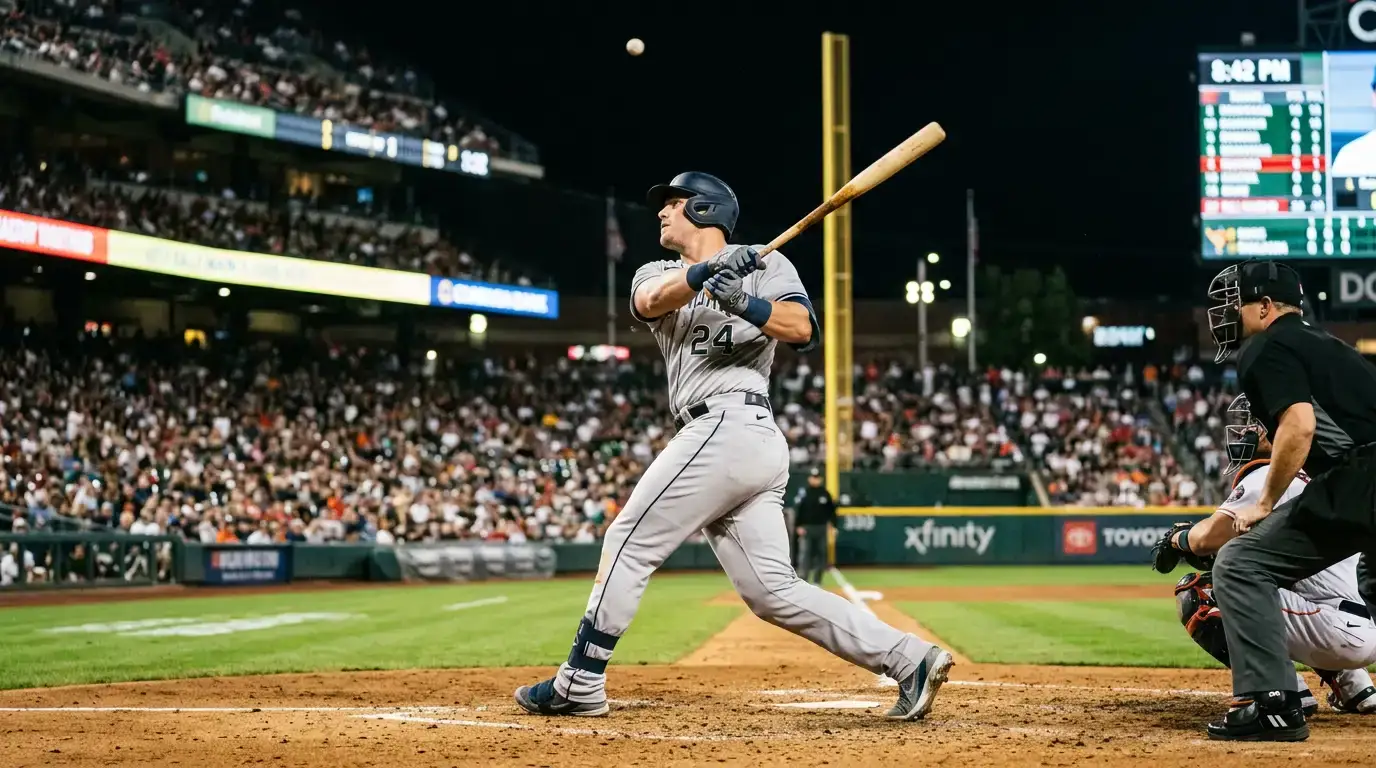
I have a friend who bets one to-hit-a-home-run prop every game his team plays, has done so for years, and is genuinely surprised every time he loses despite winning roughly one in five. That is the home run prop market in a sentence. The maths is unforgiving, the implied probabilities are heavily skewed towards the under, and the casual punter consistently misreads the price as more attractive than it is.
For UK punters who have followed the post-2022 home run boom and want to bet on individual hitters going deep, the home run prop is the natural-feeling market. Understanding how the lines are priced and where the actual value sits is the difference between bleeding money on +400 fliers and finding the smaller-but-genuine edges that exist on this market.
The structure of the to-hit market
The standard home run prop is “to hit a home run” on a specific player in a specific game, priced as a binary outcome with vig on both yes and no. A typical right-handed power hitter facing a right-handed pitcher in a neutral park might price at +350 to hit a home run, with the no side at -500. The implied probability of the yes side at +350 is 22 percent before vig; the no side at -500 implies 83 percent.
The vig spread is enormous on this market. Adding the implied probabilities, +350 yes plus -500 no totals 105 percent, meaning the book is pocketing 5 percent overround. That is wider than full-game moneyline overround (typically 2 to 4 percent) and wider than total overround (4 to 6 percent), reflecting the higher per-bet variance and thinner liquidity of the to-hit market.
For the home favourites and headliners, prices typically run +250 to +450 to hit a home run, with the no side at -350 to -650. For mid-tier power hitters, prices run +500 to +900. For contact-oriented hitters with rare home run output, prices can stretch to +1500 or longer. The shape of the pricing reflects the underlying base rates: even the league’s top home run hitters average roughly one home run every 12 to 15 plate appearances at peak.
The 2025 power surge in context
The 2025 MLB season produced four players with 50-plus home runs, a level of power concentration the sport had not seen since the steroid era. Cal Raleigh, Kyle Schwarber, Shohei Ohtani, and Aaron Judge all crossed the threshold. Aaron Judge specifically posted .331/.457/.688 with 53 home runs, 124 walks, 124 RBI, and 9.7 bWAR. Shohei Ohtani recorded 55 home runs, 146 runs scored (the MLB lead), 1.014 OPS, and a 2.87 ERA on the mound across his dual-role season.
The 2025 season also produced 7 players with 30-plus home runs and 30-plus stolen bases, a record for the live-ball era. The simultaneous emergence of high-power, high-speed offence has changed how books price home run props. The implied probability of a home run from any given top-tier hitter has crept up across the post-2022 power era, and the price ladder now starts tighter than it did five years ago. A Judge or Ohtani or Raleigh start carries a +225 to +275 to-hit price most days, well below the +400 ceiling for elite hitters in pre-pitch-clock years.
For punters working the home run prop market, the 2025 baseline matters because the no-vig fair price has moved. A +275 price on Judge to hit a home run implied 26.7 percent before vig in 2025, against a no-vig fair price closer to 28 to 30 percent on average. The over (yes) is now closer to true odds than it used to be, but still typically priced 1 to 3 percent unfavourably.
2-plus and 3-plus home run props
Beyond the basic to-hit market, crypto books increasingly offer 2-plus home run props (priced around +1500 to +3000 for the league’s elite hitters) and 3-plus home run props (priced at +20000 or longer as essentially flier bets). The 2-plus market is genuinely sometimes bettable when a top hitter faces a particularly favourable matchup; the 3-plus market is essentially a lottery ticket with house edge baked in.
The 2-plus prop maths is harsher than the 1-plus maths. A hitter with 22 percent implied probability of hitting any home run has roughly 4 percent implied probability of hitting two, with diminishing returns above that. A +2000 price on 2-plus implies 4.7 percent, which sits near the no-vig fair price for the league’s elite hitters. The pricing efficiency on this market is genuinely tight on most major crypto books.
For UK punters running home run prop strategies as a structural part of their bankroll, the 2-plus market is where I have found the most defensible edges across multiple seasons. The maths required to identify the matchup-specific opportunities (high-power lineup against a high-flyball pitcher in a hitter-friendly park) is more granular than the 1-plus market requires, and books rely more heavily on heuristics for the 2-plus pricing.
Park factors and pitcher pitch type
The two largest variables in home run prop modelling are the ballpark and the pitcher’s flyball-versus-groundball tendency. A flyball pitcher in Yankee Stadium, Great American Ball Park, or Camden Yards faces structurally elevated home run risk regardless of the hitter. A ground ball pitcher in Petco Park, Oracle Park, or Comerica Park faces structurally suppressed home run risk regardless of the hitter.
Books factor park and pitcher tendency into the prop pricing but the weighting varies. Mainstream offshore books that supply pricing to many crypto operators tend to over-weight the hitter’s recent form (last 10 games) relative to the structural park-pitcher matchup. That creates pockets of value on hitters with mediocre recent form but excellent matchup setup, where the book’s price reflects the form rather than the matchup.
The 2025 season reinforced one classic park effect that crypto books have not always fully integrated: Coors Field amplifies home run output by 25 to 35 percent compared to neutral parks, and the prop pricing for a hitter at Coors should reflect this. Books update the line ahead of the game but sometimes the adjustment lags the actual park effect, especially for hitters who do not normally play at Coors.
Live home run prop markets
Live in-play home run prop markets re-price as plate appearances unfold. A pre-game +275 prop on Judge to hit might trade at +225 after he has already had two productive at-bats and is due up next inning. The book updates based on the remaining plate appearances, the current matchup, and the game state.
The opportunity for live home run prop bettors sits in identifying matchups where the pitcher has just been pulled and the new reliever is structurally worse for the hitter. A right-handed power hitter who was 0-for-3 against a right-handed sinkerballer suddenly faces a left-handed flyball reliever who is the worst type of opponent. The to-hit prop should reprice meaningfully, but books with thinner liquidity sometimes lag the update by 30 to 60 seconds.
For crypto-rail live betting, Solana’s sub-second confirmation and the L2 stack’s similar speed profile let punters act on these mismatches when they occur. On Bitcoin main chain, the deposit may not confirm in time. Stablecoin staking on fast networks is the operational standard for serious live home run prop play.
Bankroll discipline on a high-variance market
Home run props are genuinely high-variance, even when bet with edge. A punter with a 3 percent edge on a +400 prop will lose more often than they win because the underlying probability is closer to 21 percent than to the 25 percent the price implies. The variance smooths over hundreds of bets, not dozens.
The unit-sizing discipline I impose on home run props is half a normal moneyline unit. If my standard moneyline bet is 2 percent of bankroll, my standard home run prop bet is 1 percent. The implied edge on the prop bet is similar in size, but the variance is much higher, and the smaller unit size keeps the cumulative drawdown manageable across the season.
For punters who want to combine home run props into parlays, the correlation needs careful handling. Two hitters from the same lineup hitting home runs in the same game is not independent: a hitter-friendly park or weak pitcher creates correlated probability across the lineup. Books price this correlation in, but the parlay multiplier is rarely as generous as casual punters expect. Single-prop bets on multiple games typically produce better expected value than parlays of multiple props on one game. The dedicated walkthrough on the broader prop market that home run props sit within lives in MLB player props on crypto books, where the full-spectrum prop strategy gets its complete treatment.
Why is the vig wider on MLB home run props than on full-game moneylines?
The book is pricing a binary outcome with very low base probability and high per-bet variance, with thinner liquidity than moneyline markets. The 5 percent overround on home run props compares to 2 to 4 percent on moneylines, reflecting the increased risk per bet for the book and the shorter pool of action available to balance the book.
Are 2-plus home run props bettable on crypto sportsbooks?
They are bettable but require granular matchup analysis to find genuine edge. A high-power hitter facing a flyball pitcher in a hitter-friendly park is the structural setup that prices best. The 2-plus market is more efficiently priced than the 1-plus market on most major crypto books, but pockets of mispricing exist on specific matchup types.
How does park factor affect home run prop pricing on crypto sportsbooks?
Hitter-friendly parks (Coors Field, Yankee Stadium, Great American Ball Park, Camden Yards) amplify home run probability by 15 to 35 percent compared to neutral parks. Pitcher-friendly parks (Petco, Oracle, Comerica) suppress it by similar margins. Books factor park into the pricing but the weighting varies, and sometimes the line lags the actual park effect for hitters in unfamiliar venues.
Written by the editors at mlb Baseball Crypto Betting.