Spring Training MLB Betting on Crypto Sportsbooks
 Available in US
The exhibition that pretends to matter
I have a friend who lost three figures betting a single Grapefruit League game in March because he assumed a starting pitcher would throw at least three innings, and the manager pulled him after one inning of what was officially a planned 25-pitch tune-up. That is spring training in a sentence. The lineup card lies, the pitching plan lies, and the result is meaningless to everyone except the bettor who took it seriously.
Crypto sportsbooks list spring training markets every February and March anyway, because punters bet on them. The question is not whether to engage but how to size the engagement so the noise does not eat your bankroll alive before the regular season starts.
Grapefruit and Cactus League mechanics
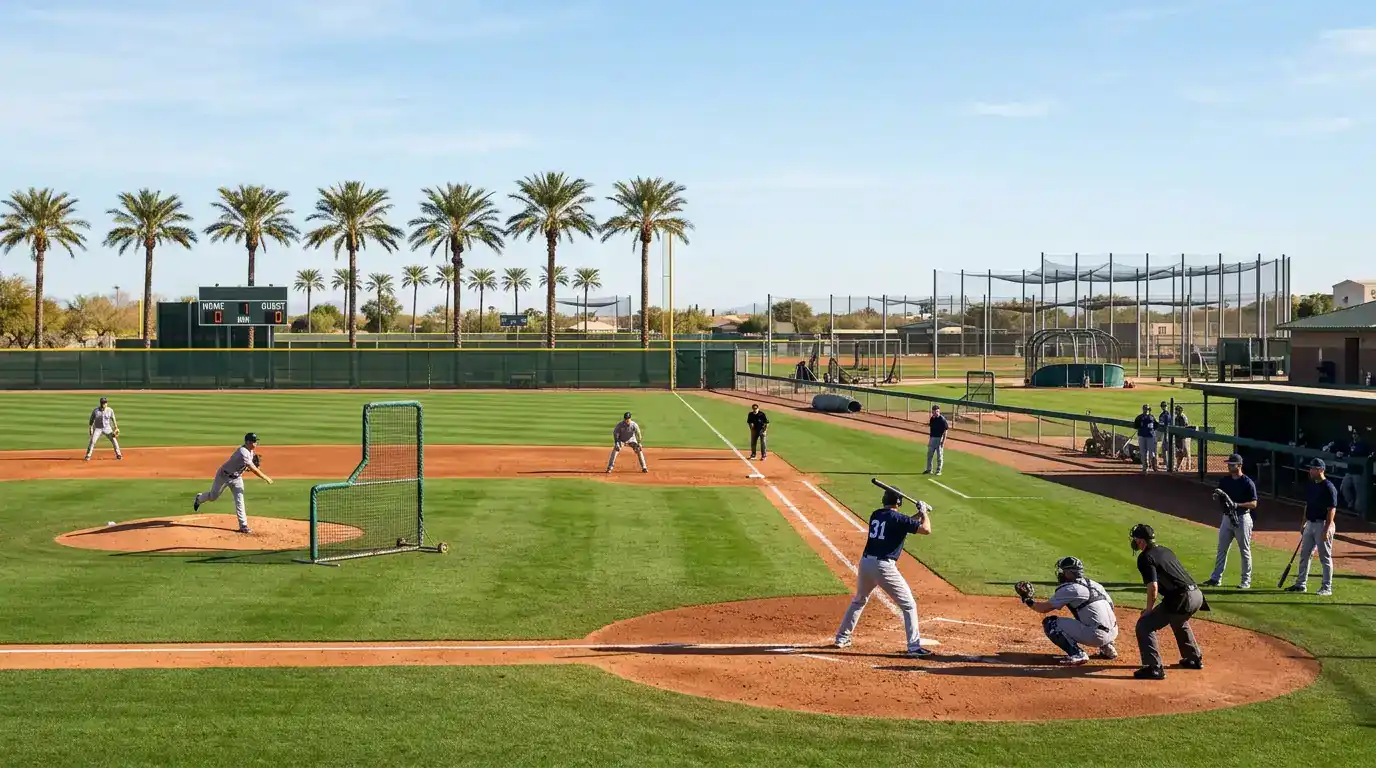
Spring training splits into two leagues geographically. The Grapefruit League runs in Florida with fifteen teams, and the Cactus League runs in Arizona with the other fifteen. Games start in late February, run through the third week of March, and exist primarily so players can shake off the off-season and managers can finalise rosters.
The structural problem for bettors: roster moves are fluid and often undocumented until first pitch. A starting pitcher listed in the morning may pitch only the first two innings, then yield to a minor leaguer who will be sent to triple-A the following week. Position players are platooned aggressively, with starters often pulled after three at-bats regardless of game state. The lineup card is a planning document, not a binding commitment.
Crypto books typically offer moneylines, run lines, totals, and a small selection of player props on spring training games. Limits are 10 to 20 percent of regular-season limits, vig runs 8 to 12 percent overround, and the books explicitly reserve the right to void bets if a starting pitcher is changed at the ballpark. That last clause is genuine, not boilerplate, and gets invoked more often in spring than in any other window.
What the lines actually mean
A Grapefruit League moneyline reflects a 50/50 baseline pricing in most cases, with small adjustments for the listed starting pitchers and home park. The book is not handicapping the matchup the way it would handicap a regular-season game, because the matchup itself is a fiction by the fifth inning. Most spring training games end with five different pitchers per side and a lineup that bears no resemblance to the one that started.
Totals are the most playable spring market, but only barely. Run scoring in spring is consistently 8 to 12 percent higher than regular-season averages because pitching is rusty, the strike zone is called more loosely by minor-league umpires, and the pitchers in the back half of the game are minor leaguers throwing batting practice in everything but name. Books adjust for this. They do not adjust enough. A 9.5-run total in March is a soft over more often than a 9.5 in June, but the edge is too small to bet aggressively on.
Run lines (the equivalent of point spreads) are the worst spring product. The standard 1.5-run line that prices cleanly in the regular season prices badly in spring because the random sub-replacement-level pitching in the late innings makes blowouts and walk-offs roughly equally likely. I avoid spring run lines entirely.
Future market resets at spring report
The genuinely playable spring training window is not on individual games but on futures markets that re-price during camp. World Series odds, division-winner odds, MVP odds, and Cy Young odds all move when teams report to camp and the first wave of injury news, velocity reports, and lineup signals comes through.
The 2025 regular season drew 71.4 million fans across 162 games per team, the third straight year of attendance growth, and the futures markets in February reflect off-season optimism that often does not survive the first two weeks of camp. A starting pitcher reported throwing 91 instead of 95 in his first bullpen, and the team’s pennant odds drift 50 to 100 cents in a single afternoon. Those are the windows where futures bettors find value, not on the meaningless exhibition games themselves.
Crypto books typically refresh their futures markets on Tuesdays and Fridays during spring training, with mid-week moves in response to specific news. The bettor’s discipline is to be ready to act on news rather than chase prices that have already moved. By the time a velocity report has hit Twitter, the futures price has usually re-baselined.
Integrity and the Manfred era
Spring training has historically been the cleanest betting window from an integrity standpoint precisely because the games do not matter. No one is throwing a March exhibition game for money, because the upside is negligible and the audit risk is real. That said, MLB Commissioner Rob Manfred has publicly addressed the broader integrity question that runs through any betting market, noting that “the integrity of the game and how that interfaces with sports betting is something we worry about every single day”. That worry attaches mostly to regular-season and postseason markets, but it is the same regulatory architecture that governs spring training prop markets, and crypto books that operate offshore inherit US-style integrity feeds either way.
What this means in practice for spring bettors: the data feeds the books rely on are the same MLB Statcast feeds used in the regular season, with the same lineup and pitching reports. The integrity infrastructure is not weaker in spring; the markets themselves are weaker because the underlying events are noisier. Those are different problems, and only the second one affects what you should bet.
Stake sizing in spring
The discipline I push on anyone betting spring training: smaller units, fewer bets, no parlays. A typical regular-season punter might run a 2 percent unit on moneylines and a 1 percent unit on parlays. In spring, both numbers should halve. A 1 percent moneyline unit and a 0.5 percent parlay unit reflects the increased noise without abandoning the engagement entirely.
Most crypto books offer welcome bonuses that can be wagered on spring training games, and that is genuinely the best use of spring as a market. Wagering a deposit-match bonus on 10 to 12 spring totals at 1 percent each, with the book’s stated rollover requirement, lets you clear the bonus without committing real bankroll to actual spring outcomes. The maths is unfavourable on each individual bet but favourable on the bonus liquidation overall.
For staking discipline more generally, the spring training window is where I most strongly recommend using stablecoins rather than BTC. The variance on a March exhibition game is high enough without adding crypto-price drift on top. A 50 USDT spring bet stays a 50 USDT result. A 50 USD-equivalent BTC spring bet can swing 5 to 10 percent in dollar terms before the bet even settles.
From exhibition to opening day
The transition from spring training to regular-season betting is sharp, not gradual. Opening Day markets price meaningfully, the lineups are real, the starting pitchers go four innings minimum, and the variance compresses to its 162-game equilibrium within the first ten days. The same coin and the same crypto book that gave you frustrating spring results gives you cleaner regular-season action almost immediately.
What I tell anyone using spring as a learning window: treat the bets as tuition, not as profit centres. Watch how your chosen crypto book handles voided bets when starting pitchers are pulled. Watch how live in-play feeds behave when sub-replacement-level pitchers enter in the sixth inning. Watch which prop markets the book grades cleanly and which it grades sloppily. All of that information transfers to the regular season. None of the actual spring training results do.
For punters who want to size their full-season bankroll plan from spring training onward, the staking-discipline conversation continues in the dedicated piece on stablecoin staking for MLB crypto betting, which lays out the unit-sizing framework that travels cleanly from March through October.
Are spring training games worth betting on a crypto sportsbook at all?
They are a learning window more than a profit window. Limits are low, vig is wide, and the underlying events are noisy because lineups and pitching plans change without notice. Most experienced punters use spring training to test how books handle voided bets, live feeds, and prop grading rather than to chase real edge.
What types of bets do crypto sportsbooks void most often during spring training?
Bets dependent on a specific starting pitcher when that pitcher is changed before first pitch. Books explicitly reserve the right to void those bets in their terms. Pitcher prop bets are the most affected; moneylines and totals usually grade as normal regardless of which starter actually appears.
Why do MLB futures markets move more in spring training than during the regular season?
Camp is when the first concrete signals about player health, velocity, and lineup configuration reach the public. Off-season speculation gives way to physical evidence, and futures markets reprice rapidly on injury reports, velocity readings, and roster construction news. The volatility is genuinely real even if the spring exhibition games themselves are not.
Created by the ”mlb Baseball Crypto Betting” editorial team.